

18-inch Hydro Excavator or a 27-inch Hydro Excavator
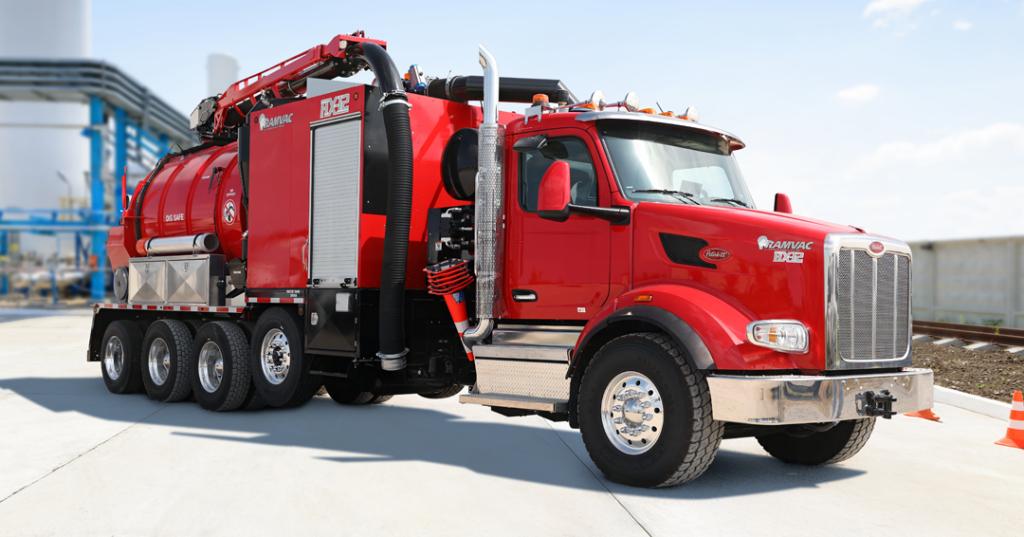
When a contractor or utility company considers using Rock Rental Hydro Excavators, one of the foundational decisions is: should I employ an 18-inch Hydro Excavator or a 27-inch Hydro Excavator? The right choice impacts operational efficiency, maintenance, cost, reach, and suitability for the task at hand. Below is a detailed comparison of the two classes of Hydro Excavators, focusing on how and why one would choose one over the other, especially in the context of Rock Rental’s rental fleet (e.g. the HX-12, HX-12/27).
Hydrovac Fundamentals: Vacuum, Water, and Debris Systems
First, it is helpful to understand baseline hydrovac performance trade-offs. A hydro excavator works by injecting high-pressure water to cut soil and then vacuuming the resulting material into a tank. The vacuum blower is rated in cubic feet per minute (CFM) and vacuum in terms of inches of mercury (Hg). An 18-inch blower rating (i.e. 18-inch Hg) may support 4,400 CFM, while a 27-inch blower will yield higher vacuum force – typically in the 5,400 CFM range – through the same hose diameter (e.g. 8 inches) for a heavier suction pull.
Because the material is being lifted over a distance, the vacuum strength (Hg) matters the further and deeper the operator digs. Positive displacement (PD) blowers are common in hydro excavators, especially for pulling heavier or wetter material over longer distances, because they maintain suction even under load. The 27-inch class, with stronger vacuum head, excels at long-hose remote digging tasks; the 18-inch class is more suited to closer, more routine excavation where airflow (speed), staying within reach of the boom, and simplicity matter.
Rock Rental’s Machines: Specs and Real-World Performance
Consider the Rock Rental HX-12 (18-inch class) and the HX-12/27 (27-inch class) machines.
- The HX-12 features a 12 cubic yard debris body, an 18-inch blower system rated at 4,400 CFM at 18-inches Hg, an 8-inch vacuum hose system, and a 1,300 gallon water tank. The water pump is rated at 18 GPM @ 2,500 psi. The machine is designed for reliability, simplicity, and use in all climates (no complex computer systems).
- The HX-12/27, a 27-inch hydro excavator version, retains the 12 cubic-yard tank and 1,300 gal water system, but upgrades the vacuum blower to 5,400 CFM at roughly 28-inches Hg in. In other words, the vacuum system is boosted significantly while water and debris capacity remain constant. The HX Series generally offers both variants.
Because both machines share the same water pump (18 GPM @ 3,000 psi) and tank capacity, the difference in job capability comes largely from their vacuum systems and operational configuration (hose length, pressure drop, weight, complexity).
In terms of reach, the 18-inch class machine can usually support excavation from perhaps 200 ft away or depths of 50 ft to 60 ft with solid vacuum performance (depending on soil type and hose layout). The 27-inch version, with greater suction, provides better performance when pulling through long hose runs or lifting material over height or depth.
Depth or length is always contingent on soil type, hose layout (bends, vertical lift, friction loss), and material load. A saturated clay or dense soil will reduce effective reach significantly compared to loose sandy soil.
Advantages and Trade-Offs: 18-Inch vs 27-Inch
Advantages of the 18-Inch Class
- Simplicity and Lower Maintenance: The 18-inch blower does not require a separate transfer case to run the blower, reducing mechanical complexity and fewer driveline parts to maintain. This means less scheduled maintenance, fewer potential breakdown points, and a simpler system overall.
- Faster Engagement and Responsiveness: Because there is no extra gear train or transfer case, the system can engage quicker, allowing faster transitions from travel or idle to digging mode.
- Reversibility / Hose “Burping” Capability: The 18-inch blower is reversible (i.e. able to reverse airflow) to “burp” or clear blockages in the suction hose. The reversible blower also allows the operator to pressure discharge material out of the rear door’s 6″ port. The 27-inch unit is not reversible, making blockages sometimes trickier to clear in the field.
- Idling Capability: The 18-inch system can often idle (with blower running) on the road or while repositioning and still run, meaning the system can be kept primed and ready without shutting it down.
- Fuel Efficiency and Lower Noise: Because the blower is smaller and simpler, it consumes less power and fuel under comparable loads, leading to operational savings. Noise levels are lower as well, which is beneficial when working in urban or noise-sensitive areas (less neighbor disturbance, fewer complaints).
- Sufficient for Many Applications: For standard potholing, daylighting, short- to mid-length hose runs, 200 ft or less, and moderate depth, the 18-inch system provides plenty of suction power (4,400 CFM is still a lot).
These advantages make the 18-inch class a practical and cost-effective choice for most day-to-day hydrovac work.
Advantages of the 27-Inch Class
- More Suction Power / Pull: The 27-inch blower provides significantly stronger vacuum force, which is more capable of pulling material over long hose runs, vertical lifts, or deep excavation. This makes it ideal for remote digging or jobs where the truck cannot get close.
- Better Performance at Distance: For digging sites hundreds of feet from the truck (e.g. jobs that require long hose runs) or where obstacles prevent close positioning, the 27-inch system retains performance better under load.
- More Efficient for Heavy Mud / Slurry Loads: Where the soil is dense, wet, or clay-like, the extra vacuum head helps maintain suction when the hose is fully loaded, reducing performance drop-offs in “tough” material.
- Dedicated Air Intake: The 27-inch system often has a more robust, dedicated air intake arrangement (less competition with machine air draws), which helps sustain vacuum stability in challenging environments – this prevents performance drop off.
- Better Depth Capability: While both classes’ theoretical depths depend heavily on conditions, the 27-inch class can approach deeper lifts more reliably under any conditions.
Trade-Offs and Considerations
- Cost & Complexity: The 27-inch system adds complexity – heavier blower, additional mechanical components, and is not reversible. That increases capital cost, parts, and maintenance overhead.
- Weight and Fuel Use Under Load: Under heavy load, the 27-inch system will draw more power and fuel, especially in continuous extended digs.
- Noise and Vibration: Larger blowers and stronger suction often bring more noise and vibration levels, which may be problematic in close-quarter or noise-sensitive zones.
- Blockage Clearing: The lack of blower reversibility in 27-inch systems makes it harder in the field to clear hose clogs without stopping the machine or intervening.
- Diminished Returns in Short Runs: If the job involves short hose runs, shallow digs, or frequent relocation, the extra vacuum may be underutilized. In those cases, the simplicity and responsiveness of 18-inch is more advantageous.
How to Decide: Questions & Decision Criteria
To guide contractors or operations planners, here is a decision framework on key questions:
First, ask: what is the application? If your work is primarily potholing, daylighting, utility verification, valve box exposure, or jobs where the truck can park near the dig site, then remote reach is less critical. The simplicity, fuel economy, and lower maintenance of an 18-inch hydro excavator usually make it the superior choice. However, if you frequently tackle inundated soils, demand deep probes, or find yourself doing directional boring support or drilling mud recovery – jobs that require the hose to stretch hundreds of feet from the truck – the stronger pull of a 27-inch class system is important.
Second, ask: how far from the truck are you digging? If your typical hose run is less than 200 ft to 250 ft with modest vertical lift, an 18-inch system may suffice. If you regularly need 300, 400, or more feet of hose (especially uphill or with multiple bends), the 27-inch blower will better maintain vacuum under load.
Third: do you value speed and simplicity or raw reach and power? For many operations, minimizing downtime, simplifying maintenance, and faster start/stop readiness is a priority – making 18-inch more appealing. If your business model is to take on the most challenging, remote digs, then the 27-inch system may justify the added complexity.
Fourth: how heavily loaded is your material? In heavy clay, saturated soils, or where you expect high solids content, the 27-inch unit helps maintain suction under load. In loose soils or lighter material, the 18-inch system can handle the task with less overhead.
Fifth: environmental or noise constraints. In urban areas, noise and emissions restrictions may favor the quieter, lighter 18-inch machines. The ability to idle and keep the blower engaged when moving the truck is another plus in traffic or confined job sites.
Finally, always evaluate cost vs. utilization. If your 27-inch unit sits idle for many jobs where its extra reach isn’t needed, you pay unnecessary capital cost and maintenance. A well-managed fleet might include both classes so you can deploy 18-inch machines for routine tasks and reserve 27-inch machines for heavy or remote work only.
Summary & Recommendation
The choice between an 18-inch and a 27-inch hydro excavator (as in Rock Rental’s HX-12 and HX-12/27 machines) comes down to a trade between simplicity, fuel economy, responsiveness, lower maintenance versus maximum suction, reach, and performance under high load.
At Rock Rental, your ability to offer both classes allows customers to match the machine to the job. Use this article to show them: choose 18-inch for every-day, responsive work; choose 27-inch when reach, depth, or load demands it.